Introduction:
I was born in 1943 in Sydney and George Mansfield died in Scone four years later, in 1947. So you see I never knew him. As a result, I am reliant on records, photographs, memorabilila and personal memories to make his life a little bit interesting for readers. At present I am hoping I will find someone who really did know him, someone who presumably is about 85 years old. So here goes with the story I have been able to piece together and I hope you can find something useful for your own research!
I must add how much I have enjoyed exploring the past generations in Australia, which had been unknown to me, and also to meet members of the family who have not let time obliterate our past.
The firstborn of Lucy Florence and George Charles.
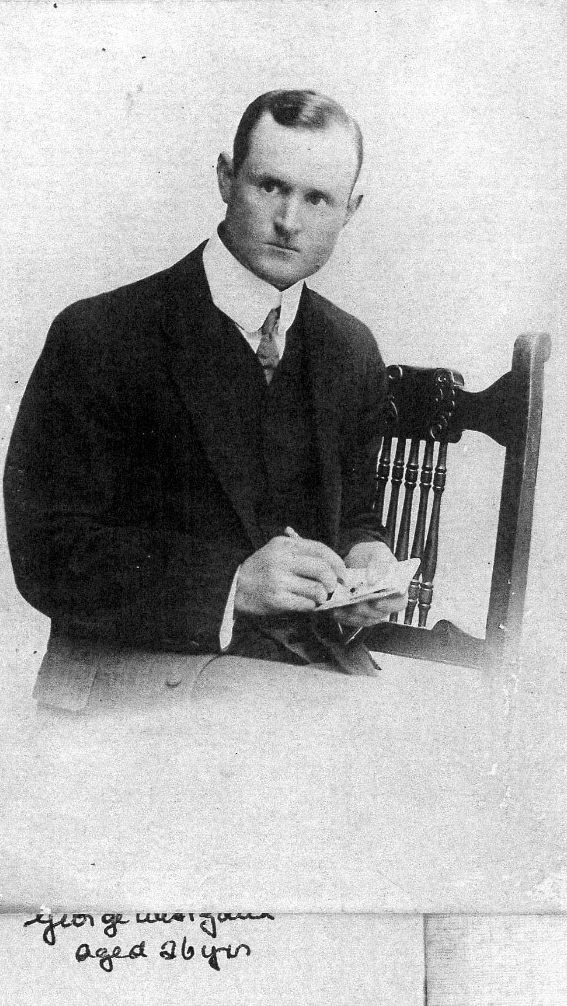
George Mansfield, called ‘Dordie’ by his mother, was born on 3rd February 1881, the year after his parents married. His mother, Lucy Florence, was only twenty-one years old, but that was usual in those days. She came from a prominent Sydney family, the Mansfields, but on her mother’s side was an even more prominent family: George Allen was her grandfather. (You can read all about them in previous blogs). George Charles Westgarth, George’s father had made a good marriage.
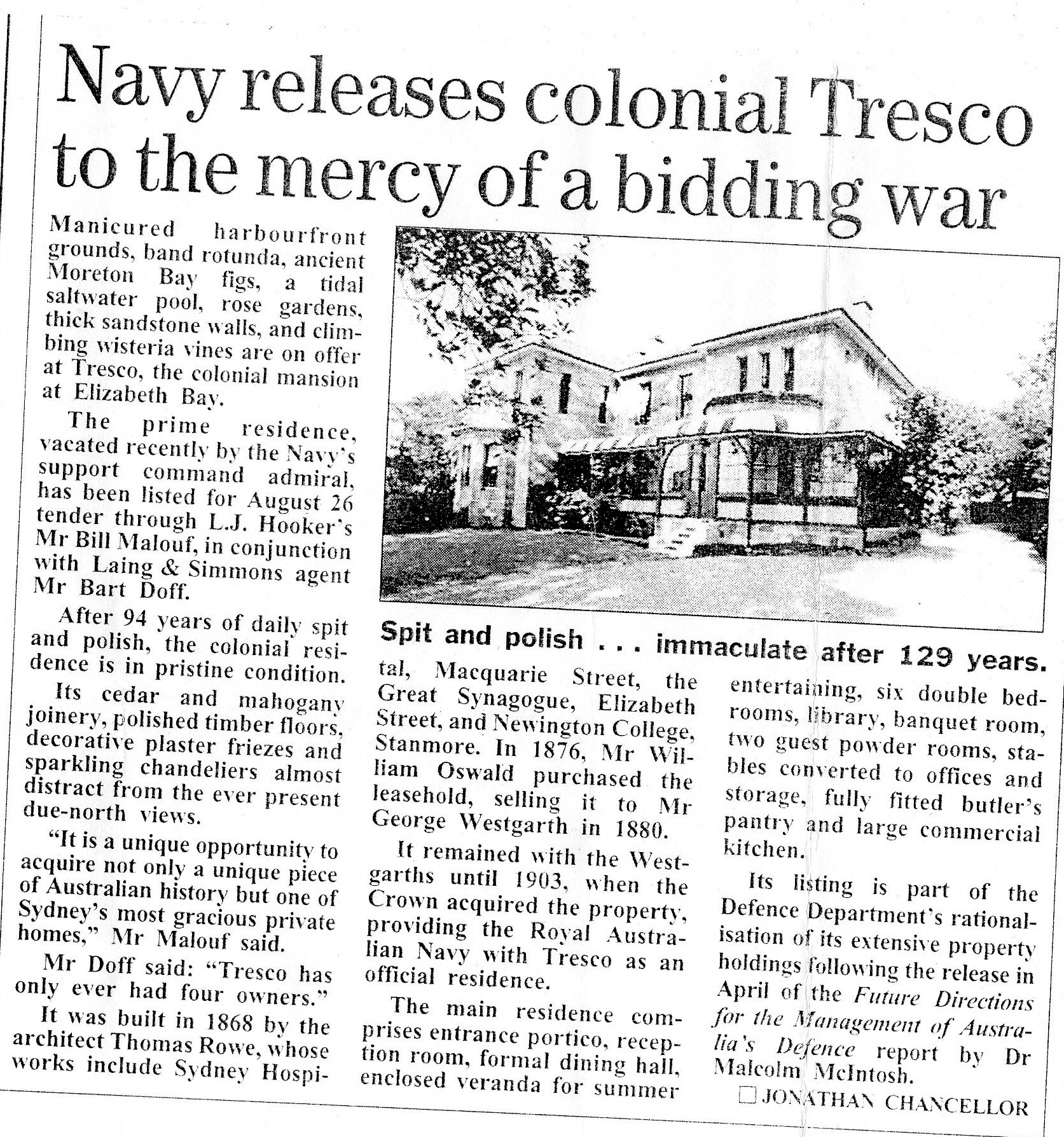
Baby George was soon living in Tresco, a mansion on the Sydney harbour front, in Elizabeth Bay, which George Charles purchased in 1880 for his new bride and prospective family. In 1884, after the birth of his brother, Ronald, in 1882, this house was renovated, probably with plans drawn up by the architect George Allen Mansfield, Lucy’s father. Gwendoline Mary Allen Westgarth was born in 1884 and named after her grandmother, Mary Emma Lucy Allen.
This article was published in a Sydney paper in 1976. Luckily the property became heritage listed and has been preserved, even though it is in private hands.
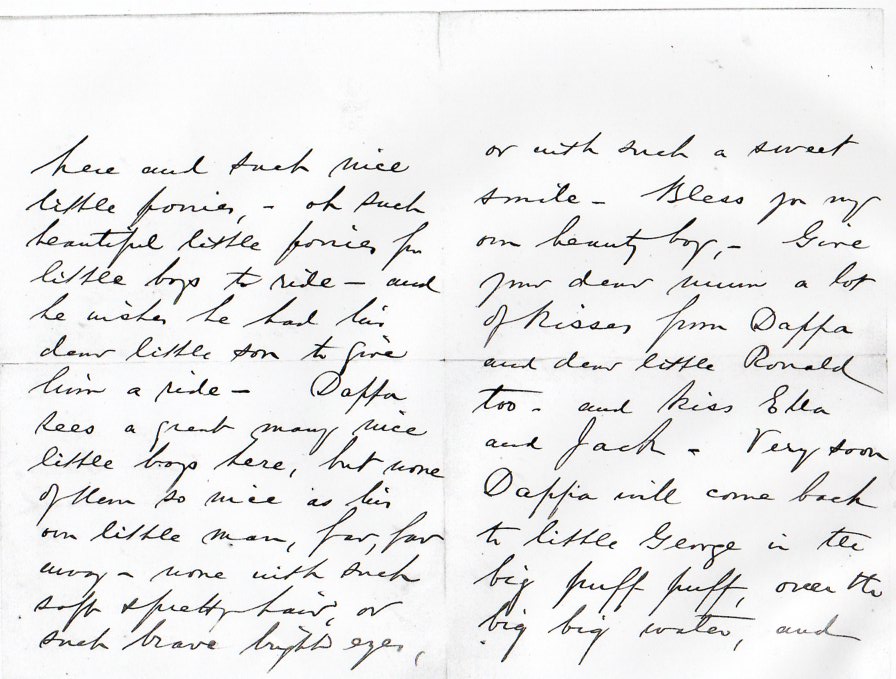
From the time of George Mansfield’s birth, George Charles and Lucy Florence were spending happy social occasions with the Mansfield family at Glen Lorne, a country retreat near Campbelltown, belonging to Lucy’s father and her stepmother, Lorne, nee McDougall. The previous blog has a picture of the Mansfields enjoying an afternoon of cricket at Glen Lorne. The whole family used to go for a day’s outing as implied in this letter to baby George, aged about 2, from his grandfather, George Allen Mansfield.
(Interestingly Stephen told me that George Mansfield gave himself the name ‘Dappa’ when he had grandchildren! Dudley called himself ‘Char’ but I am not sure yet where that came from.)
Kensington, London
July 27th 1883
My darling little Grandson
This is a letter from Dappa to his own sweet little George to tell him how much Dappa loves him and how he always thinks of his bright and bonnie little mannie – Dappa sees such pretty horses here and such nice little ponies – oh such beautiful little ponies for little boys to ride – and he wishes he had his dear little son (sic) to give him a ride –
Dappa sees a great many nice little boys here, but none of them so nice as his own little man, far, far away – none with such soft and pretty hair, or such brave bright eyes, or with such a sweet smile. Bless you my own beauty boy – Give your dear mum a lot of kisses from Dappa and dear little Ronald too – and kiss Ella and Jack.
Very soon Dappa will come back to little George in the big puff puff, over the big big water and then won’t it be nice to take his little man on his knee and tell him about all the pretty things and take him up to Glen Lorne and show him all the cows and the horses and the pigs and the chickies.
Give a nice kiss to dear Papa and get Mum to give you a lot of hugs and a lot of love from your own old,
Dappa

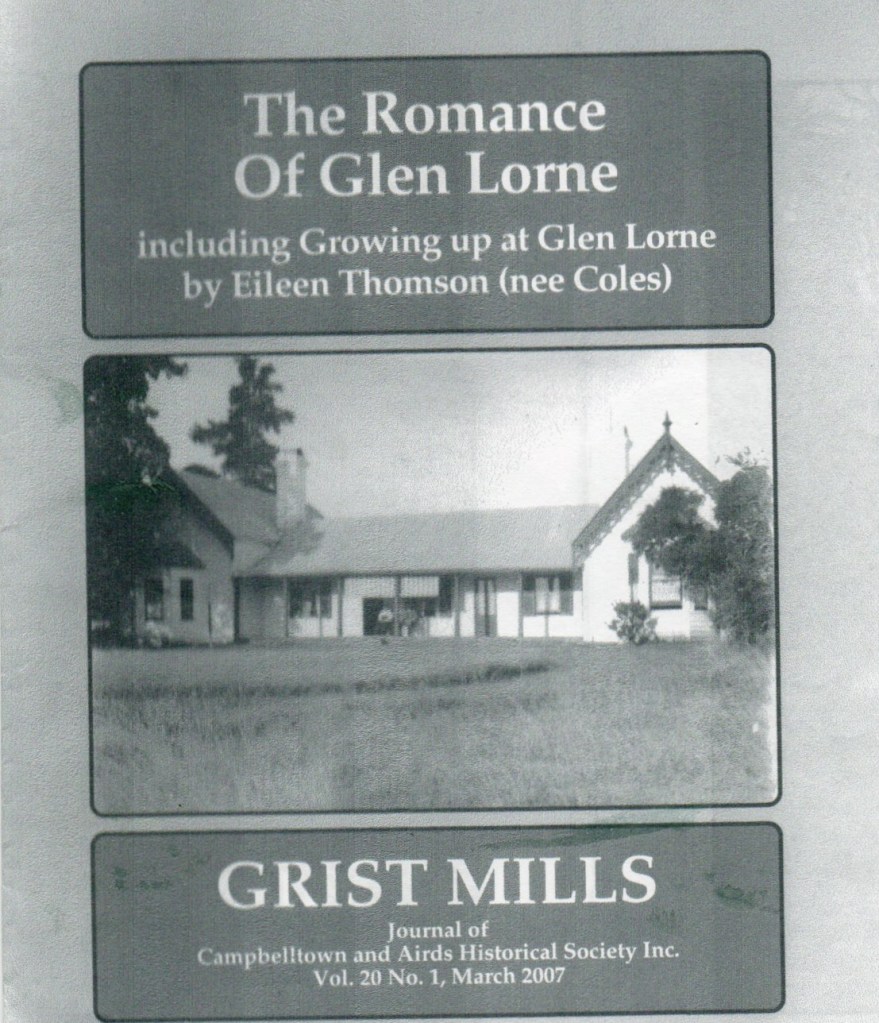
A booklet has been produced about Glen Lorne, written by Eileen Thomson, nee Coles. It can be obtained from the Campbelltown and Airds Historical Society Inc.
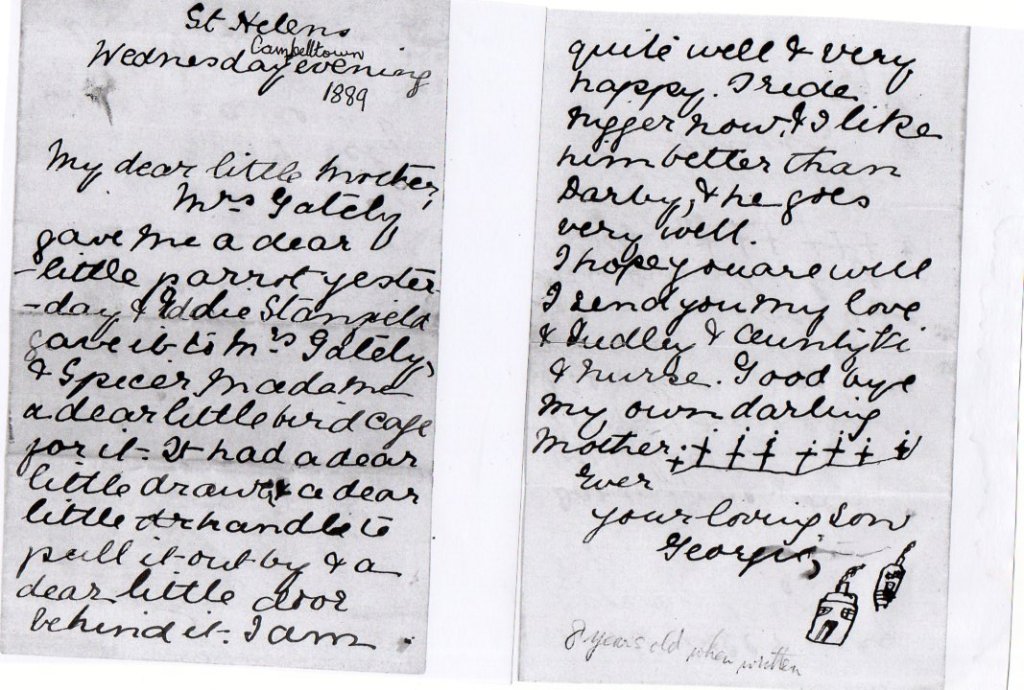
These country retreats of prominent members of society, who were not landowners, were made possible by the development of the railways. By 1886, George Charles had decided to purchase land nearby at Appin and in 1887 he built a country home, St Helens, designed by his architect father-in-law. George Mansfield, Ronald and Gwendoline would soon be living there, with their stepbrother, Jack (10) and stepsister Ella (14). Then a brother, Dudley, was born at Tresco on June 1st 1887 and another, brother, Mervyn, was born in 1888, so a country home with horses, cows, wildlife and bush to explore must have been idyllic for these lucky children. Here is a letter which was kept by Judy Westgarth, written by George Mansfield when he was 8. In it, he expresses his love of life at St Helens through his childish words.
St Helens Campbelltown
Wednesday evening (1889)
My dear little mother,
Mrs Gately gave me a dear little parrot yesterday and Eddie Stanfield gave it to Mrs Gately and Spicer made me a dear little bird cage for it. It had a dear little drawer and a dear little handle to pull it out by and a dear little door behind it. I am quite well and very happy. I ride Nigger now and I like him better than Darby and he goes very well.
I hope you are well. I send you my love and Dudley and Aunty Vi and nurse. Good bye my own darling mother XXXXXXXX
Ever your loving son
Georgie (aged 8)
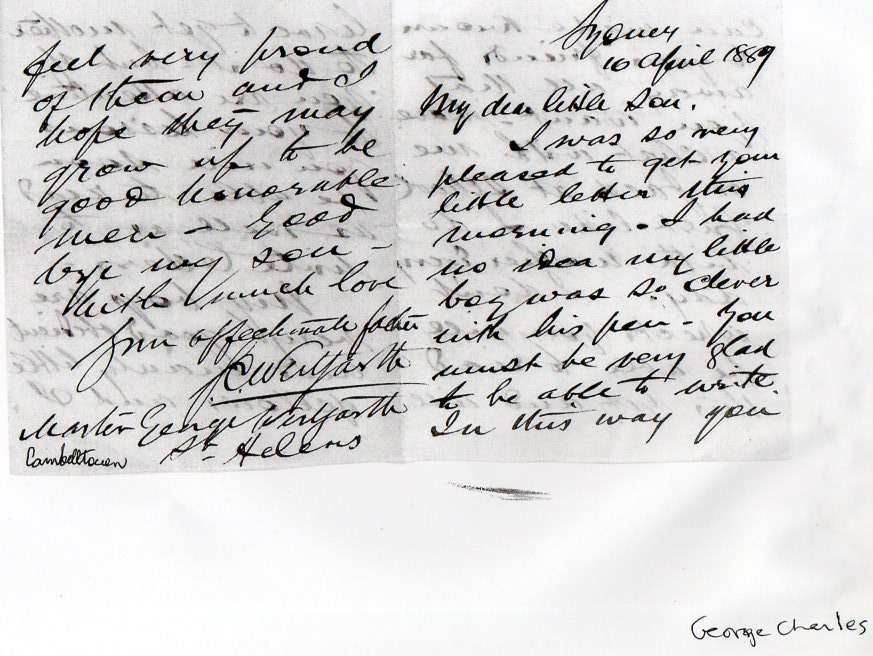
Sydney, 16th April, 1889
My dear little son,
I was so very pleased to get your little letter this morning. I had no idea my little boy was so clever with his pen. You must be very glad to be able to write. In this way you can make known to your friends far away all that you want – have a chat with me or Jack at school, just like I do with mother every day. I don’t expect you will be able to read this yet and will have to get mother to do it – but if you are attentive to your lessons you will soon be able to read as well as to write letters.
My boys are very good, obedient and manly little fellows and I feel very proud of them and I hope they may grow up to be good honorable men –
Good bye my son –
With much love, your affectionate father,G
It is obvious that the family has plenty of help in the house and grounds. There are Mrs Gately and nurse in the house, as well as Aunt Vi and probably a tutor and a governess for the children. In the grounds there are Eddie Stanfield and Spicer, to name two. In 1908 there were workers called Cable and Smith in employment at St Helens (in the estate papers, they were owed £3 ans £4 respectively).
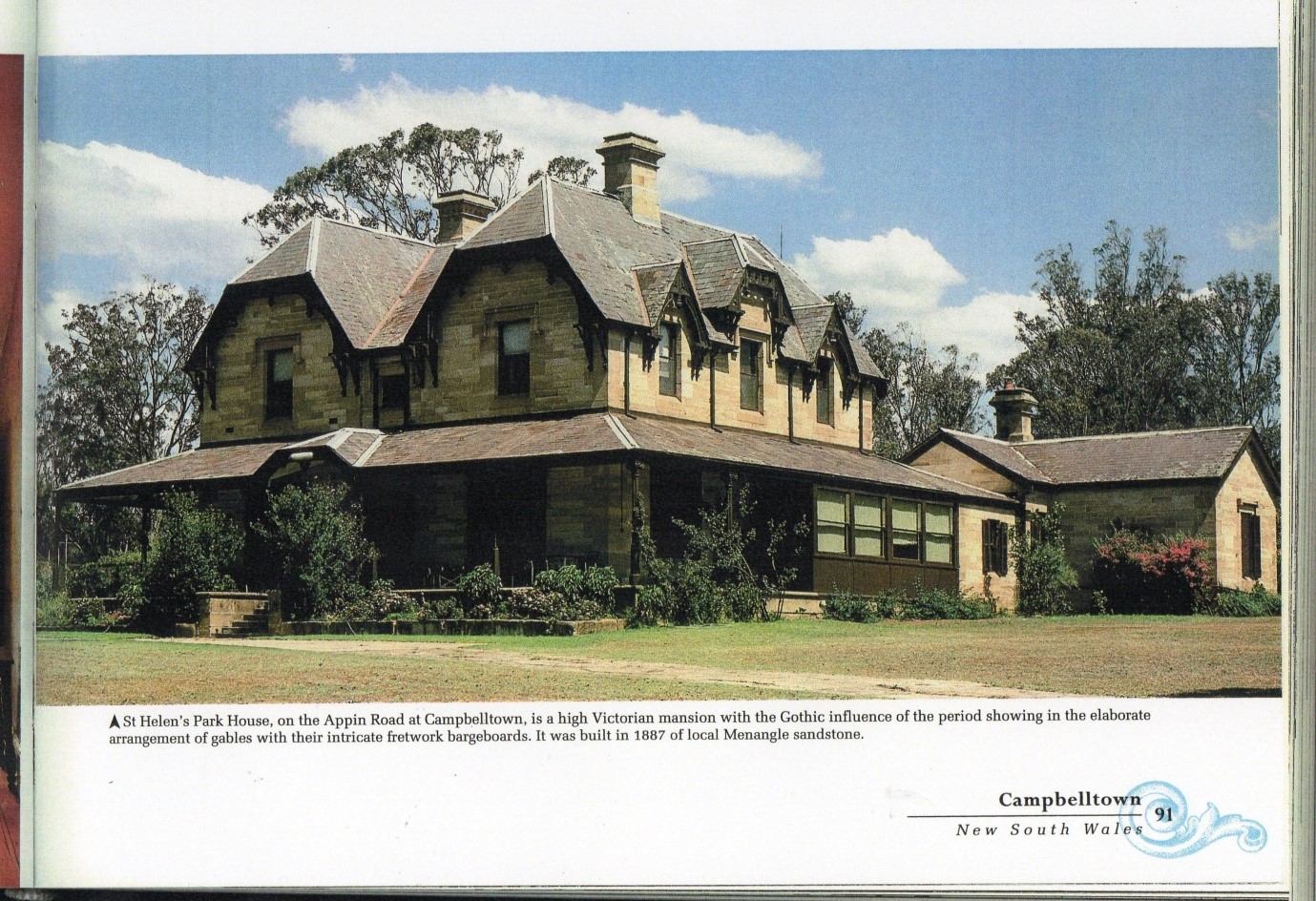
In 1891, George Charles moved the family out of Tresco and leased it, presumably profitably, until he sold it to the Crown in 1902. The family home was now St Helens, but it was not suitable for the boys’ schooling.
From the Sydney Grammar records, I see that Jack went to Sydney Grammar from St Helens, probably on the train, from 1891 until 1894 when he would have turned 18. Here is the record from the SGS archives:
VOL01 308 3837 WESTGARTH JOHN 14 G C WESTGARTH ST HELENS JAN 1891 SEP 1894 CAMPBELLTOWN
As the younger boys were growing up and needing education, it must have become necessary to have a house in town. Lucy Florence’s older boys, George and Ronald, went to North Shore Grammar School and the family was living at ‘Budleigh’, Kirribilli Pont North Sydney from about 1894. (The Christmas Card in the previous blog shows George Charles and three boys at Manly in 1894). George Charles could have taken the ferry across to the city.
George would have been 13 in ’94 and Ronald 12. Doreen was born there in 1896. Here is her birth notice:
WESTGARTH Sydney Morning Herald, 7th November 1896, page 1
November 2nd 1896, at her residence, ‘Budleigh’, Kirribilli Point, North Sydney, the wife of G.C.Westgarth, of a daughter.
………………………………………………………………………………………………………………………………………..
Dudley was only 7 and Mervyn 6 in 1894. However they must have gone to live in Kirribilli Point too, because George Charles rented out St Helens in 1894. Here is the ad.:
CAMPBELLTOWN – ST. HELENS. Charming Country Home, on the heights of Campbelltown, the residence of G.C.Westgarth, to LET. Furnished, for 12 months, with use of horses, vehicles, etc. A pony. G.C.WESTGARTH, Pitt and Bond Streets, Sydney (SMH 25/4/1894 page 10)
It was only for 12 months, but probably the lease was continued for a good while, because after Kirribilli Point, in 1897, George Charles moved the family to The Pines, Avoca Street, Randwick. This was a good address on the park. The older boys changed school, and went to Sydney Grammar for a short time before graduating. Here is the record:
VOL01 374 4820 WESTGARTH RONALD 15 G C WESTGARTH THE PINES, AVOCA ST JUL 1897 DEC 1898
VOL01 374 4819 WESTGARTH GEORGE MANSFIELD 16 G C WESTGARTH THE PINES, AVOCA ST JUL 1897 DEC 1897 RANDWICK
The younger boys went to Sydney Grammar School when they became of age. Dudley would have been 10 in February 1898 and Mervyn would have been 11 in January 1900. Bond Street (or Pitt and Bond Streets) was George Charles’ office at the time.
VOL01 380 4916 WESTGARTH DUDLEY 10 G C WESTGARTH BOND ST FEB 1898;
VOL01 405 5295 WESTGARTH MERVYN 11 G C WESTGARTH THE PINES JAN 1900 RANDWICK.
………………………………………………………………………………………………………………………………………..
The following paragraph is taken from the paper on George Mansfield Westgarth by Neil Thornton, a nephew of Judy Westgarth.
George Mansfield was a keen athlete and swimmer. The Australian Town and Country Journal article of 10th August 1901 showed that he won his heat of the 100 yards Old Boys’ Race that year. The Evening News in February 1905 listed G.M. Westgarth participating in the Waverley Swimming Club races held at Bronte baths. It seems that ‘Dordie’ could have started his Law studies in 1898, but he was not admitted until 1907. Dudley, who was 6 years younger than George, was admitted three years later, in 1910, but he went to Sydney University (and George Mansfield did articles). Perhaps the articled clerk system took longer.
In 1905, when the family left Randwick, George Charles and Lucy Florence went to London. However, they still had young daughters at home: Violet was 15 and Doreen was 9. Gwendoline was still unmarried at 21. For the boys, Mervyn was going to Agricultural College and raised pups. Dudley was at Uni and George Mansfield had Law exams to pass. Ronald was working as a merchant. With the parents away for months and the varied needs of the family, it seems that they returned to life at St Helens but also rented Fig Tree House at 1 Reibey Road, Lane Cove. (Called Longueville in the nineteenth century and now it seems to be Hunters Hill).
(George Charles was to die at St Helens only three years later, so it does seem the parents had returned to Appin to live on their return from London.)
Lucy Florence was supported by the estate of George Allen until she died. This estate had property in Lane Cove. There was ‘Brandstock’ in Mary Street and another property in Stuart Street. There was probably some support from the Allens in renting Fig Tree House. Lucy Florence was receiving a share of the rent of ‘Brandstock’ regularly, for example. ( Outlined in her Estate Papers)
In 1909, after she suddenly became a widow, Lucy Florence sold St Helens and went to Fig Tree House to open a school.
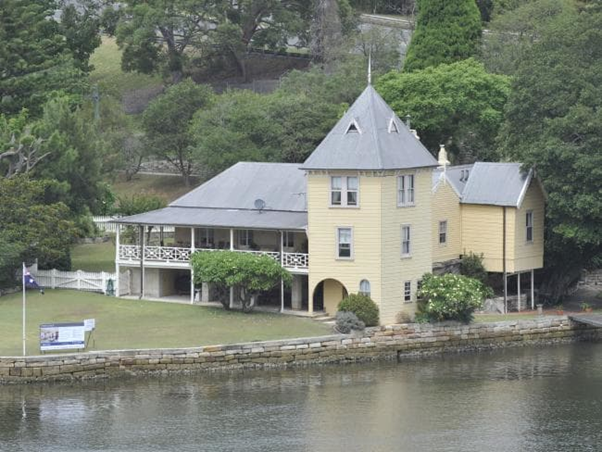
This house, a very old wooden one, built by Mary Reibey, has a tower. In about 1906, George Mansfield was there studying for his exams, but he got bored. His grandson, George Michael, was told this story by his father:
‘I know from my father, that the family also lived at Fig Tree House while George M was studying for his law exams. My Dad once told me a story that his father must have told him about throwing a fishing line into the river from the tower room while he should have been studying. George M would have been in his 20s at that stage.’ Yes, he would have been 25 and already had a lovely fiancee whom he could not marry until he passed all his exams and got a job! I wonder if he caught a fish…..
George Mansfield studied Law under the articled clerk system and was admitted as a solicitor on Saturday 25th May 1907. Here is his advertisement:
IN THE SUPREME COURT OF NEW SOUTH WALES
TAKE notice that GEORGE MANSFIELD WESTGARTH of Campbelltown in the State of New South Wales lately serving under Articles of Clerkship to Edward Percy SiMPSON Esquire of Norwich Chambers Hunter Street Sydney and subsequently by Assignment to George Charles Westgarth Esquire of Mutual Life Building Martin Place and for the last two years residing at Randwick and Campbelltown do intend to apply on the last day of the present term lo be admitted an Attorney, Solicitor and Proctor of this Honourable Court. Dated this 21st day of May A.D. 1907
G. M. WESTGARTH
Daily Telegraph Friday 24th May 1907 page 2 Advertising section
He moved immediately to Scone, where he established his business and stayed for the rest of his lfe. From a notice of the placement of country solicitors I found this information:
Westgarth, G. (51) 25 May, 1907 Agent: Garland, Seaborn, and Abbott
He had been engaged to Katrine Gowan Robertson (born 30th March 1882) for several years before he graduated. In the letters from George Charles and Lucy Florence in London in 1905 and 1906, it is clear that Katrine has been George’s fiancee for some time and is accepted as one of the family. You can read the letters in the blog about George Charles. These portraits were sent to London, as requested by George Charles and Lucy Florence.
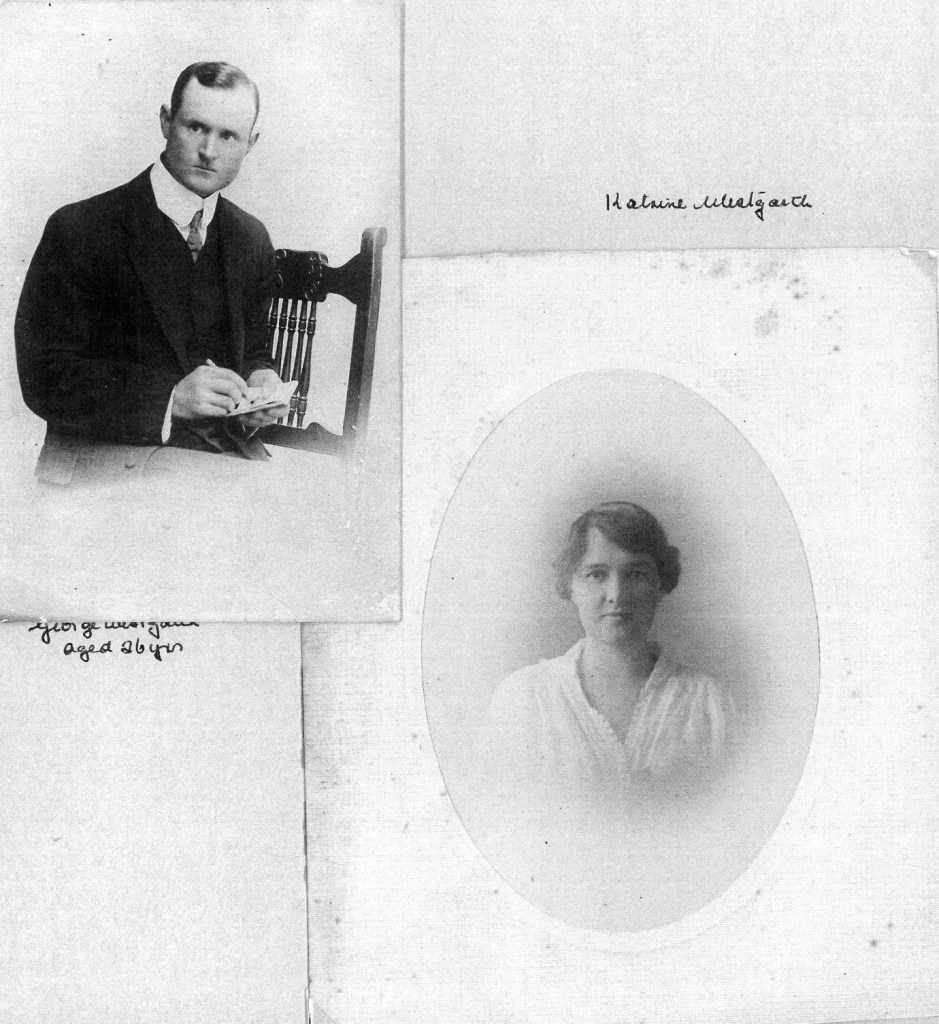
Katrine came from the Robertson family of the Hunter valley. She was one of three sisters. The Robertsons had intermarried with the Rodd family, as George Charles had in his first marriage. I have included more information about Katrine at the end of this blog.
George Mansfield Westgarth’s early life seems to have been a happy one. When he became independent, he adopted his father’s home made Coat of Arms and used the motto in daily life, giving help to other people in many ways. George Charles also had the crest engraved in gold on a bloodstone ring. George Mansfield inherited this ring and greatly prized it.
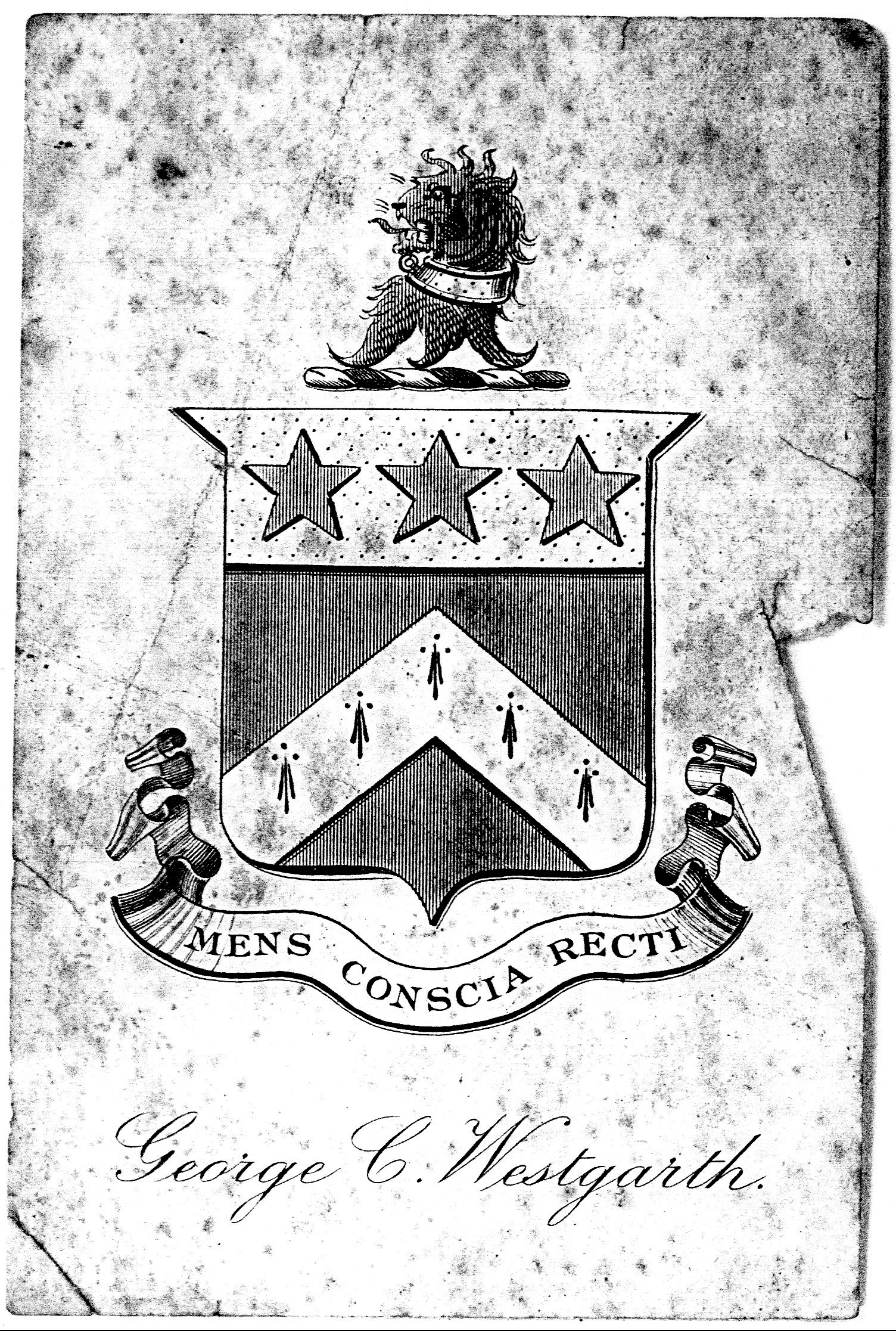
A good son to his father:
During his father’s illness in 1908, his medical condition took away his earning power so many friends as well as family members lent him money. George Mansfield lent £100. Also, although being far away in Scone, George Mansfield brought his father to Scone for treatment by Dr W D Dight, (who charged £22/12/-)
MARRIAGE OF GEORGE AND KATRINE AFTER A LONG ENGAGEMENT.
Because George Charles died suddenly on October 5th, 1908, after an illness of six months, he did not see any of his second family get married. Ella, his firstborn, had married at Randwick in 1899, but John (Jack) went off to be a soldier the same year. So Katrine and George Mansfield finally married in 1909, after the formalities of burial and probate were completed. A sad disappointment for them and for Lucy Florence of course.
WESTGARTH-ROBERTSON
March 17, 1909, at the Presbyterian Church, Ashfield, by the Rev. McGowan, George Mansfield, second son of the late George Charles Westgarth; to Katrine Gowan, second daughter of the late Richard Windyer Robertson, formerly of Kaloma, Milton-street, Ashfield.
SMH 27th March1909 page 12
………………………………………………………………………………………………………………………………………..
Leisure Activities of George Mansfield in Scone (from Neil Thornton)
In Scone George Mansfield enjoyed rifle shooting, something he probably had plenty of practice doing at St Helens. He was a member of the Scone Rifle Club and the Singleton Argus of 19th August 1915 reported that the Scone Club defeated Singleton that year and G.M.Westgarth contributed to that victory. He was also keen on horse racing, another pastime of his youth, and there are many articles recording his attendance at different racing carnivals in the area.
Some facts about Katrine’s family
Katrine, ‘Pretty Puss’ was one of three sisters who were well known in society. Their grandfather was Sir John Robertson, (1816-1891) the fifth Premier of New South Wales, 1856, and after that he became Premier four times more. He is best remembered for land reform, in particular the Robertson Land Act of 1861, which tried to free up land of ‘squatters’ for farms for new settlers, who were called ‘selectors‘.
Robertson Land Acts
From Wikipedia, the free encyclopedia: https://en.wikipedia.org/wiki/Robertson_Land_Acts#mw-headJ
The Crown Lands Acts 1861 (NSW) were introduced by the New South Wales Premier, John Robertson, in 1861 to reform land holdings in New South Wales and in particular to break the squatters’ domination of land tenure. The Acts allowed free selection of crown land and made redundant the limits of location, which limited sale of land to the Nineteen Counties which had applied since 1826.
Under the reforms unsurveyed land in an area which had been declared an agricultural reserve in designated unsettled areas could be selected and bought freehold in 40-to-320-acre (16–129 ha) lots of crown land, wherever situated at £1 per acre (£2 9s 5d/ha), on a deposit of five shillings per acre (12s 4d/ha), the balance to be paid within three years, an interest-free loan of three-quarters of the price. Alternatively at the end of the three years, the balance could be treated as an indefinite loan, as long as 5% interest was paid each year.
The Crown Lands Acts consisted of two separate acts: The Crown Lands Alienation Act of 1861 No 26a[1] and the Crown Lands Occupation Act of 1861 No 27a[2] These acts were amended in 1875[3] and 1880[4] The Robertson acts were replaced completely by new legislation with effect from the beginning of 1885.[5]
Selectors were required to live on their land for three years and to make improvements worth £1 per acre.[6] Speculation was to be prevented by requiring actual residence on the land.[7] In return pastoralists were protected by granting them, at the conclusion of their present leases, annual leases in the settled districts and five yearly leases elsewhere, with a maximum area or carrying capacity, and an increase in rent by appraisement of the runs. The pastoralist retained the pre-emptive right to buy one twenty-fifth of his lease in addition to improved areas, and also possessed the pre-lease to three times the area of the freehold. In addition they were to continue to possess the right to request the survey and auctioning of large parcels of their lease. This meant that they could bid at short notice for such land while other potential bidders were unaware that the land was on the market.[8] The work of Alexander Grant McLean, Surveyor General of New South Wales facilitated the introduction of these Land Acts.[9]
Subsequently, there were struggles between squatters and selectors, and the laws were circumvented by corruption and the acquisition of land by various schemes, such as the commissioning of selections to be passed eventually to squatters and the selection of key land such as land with access to water by squatters to maintain the viability of their pastoral leases. The Land Acts accelerated the alienation of crown land that had been acquired under the principle of terra nullius, and hence accelerated the dispossession of indigenous Australians.[10]
………………………………………………………………………………………………………………………………………..
The Land Acts, which had a good purpose, seem to have made a lot of things worse for farmers and for aboriginal people too!
Six Children:
The year after Katrine and George were married,in 1910, they had a son, George Robertson.
He was followed in 1912 by a daughter, Barbara Katrine. Here is the announcement:
BIRTH WESTGARTH – May 8th, 1912, at “Garthgowan” Scone, the wife ofGeorge Mansfield Westgarth, a daughter (The Scone Advocate Friday May 21, 1912 )
Then Audrey Jose Jeanette was born in 1914:
WESTGARTH.—September 21, 1914, at Garthgowan, Scone, the wife of George M. Westgarth-a daughter. (Scone Advocate)
Then Winston Earle in 1916:
BIRTH. WESTGARTH.– 14th August, 1916, at”Garthgowan: Scone, the wife of George M. Westgarth, a son. (Scone Advocate)
After a while, on 5/12/1922, David Burnell was born and lastly, Editha (Ditha) Deirdre on 23/2/1928.
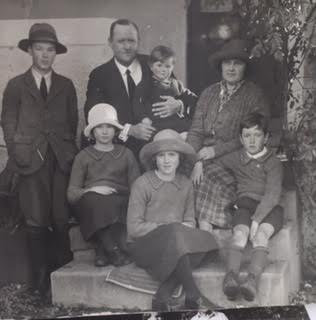
Helping Lucy Florence:
In 1925, Lucy Florence became ill with tuberculosis and died on 4th December. George and Katrine again played their part in caring for her. Lucy Florence was in Scone Hospital for which was paid £13/13/- and she was attended by Dr. V.H.Grieve who charged £11/11/-. Lucy Florence died at home in Manning Road Double Bay, but George Mansfield was one of the executors of her Will together with his brothers Ronald and Dudley (who both lived in Sydney).
Garthgowan
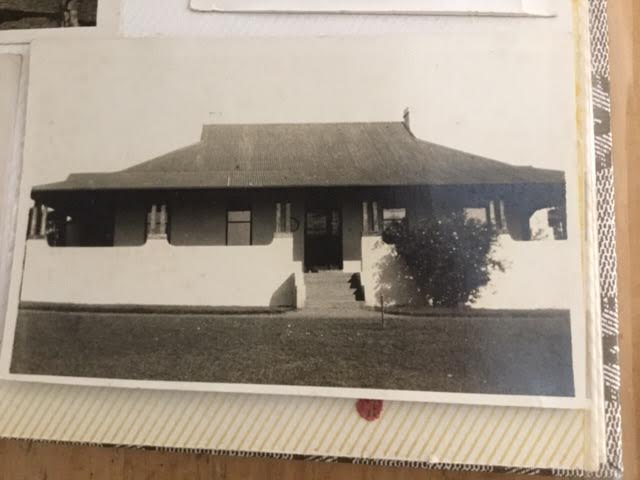
This old home on Main Street in Scone was the home of George Mansfield, Katrine and the family. It has now been demolished and been replaced by a housing estate. See below from a recent advertisement:
‘A modern feel with this lovely townhouse in the ever popular Garth Gowan complex. Centrally located to the centre of Scone, this refurbished unit is ideal……….‘
Life in Scone with a growing family
The Westgarths featured in the Social pages from time to time. Here is a snippet from: ‘
‘Susan Says’, a full page gossip column in the Sydney Sun, 14th September 1930.
“LIFE for pretty, fair-haired Struan Kemmis, of Killara, seems to consist of periodical jaunts between city and country. “Garthgowan”, Scone, is her present address, “care of” her aunt, Mrs. G. M. Westgarth, while from there any moment she will Journey to “Cotty Blue,” Qulrindl,to stay with her fiance’s people, the Herbert Crossings.”
Marriages:
The marriage of Barbara to Henry Cohen was in the Society pages. My mother became Barbara Westgarth the same year, two days earlier on 3oth November. So for two days there were two Barbara Westgarths. My mother often told us this!
WEDDINGS Sydney Morning Herald, 2 December 1938.
WHITE AND SILVER.
St. Philips Church, Church Hill was decorated in a colour scheme of green and white the flowers used being November lilies for the wedding of Miss Barbara Katrine Westgarth to Mr Henry Robert Cohen. The bride is the eldest daughter of Mr and Mrs George Westgarth of Garthgowan Scone and the bridegroom is the only son of the late Mr Edgar Cohen and of Mrs Cohen of Mosman. The ceremony was performed by Rev S G Stewart. The bride chose an old world gown of jacquard lame in white and silver patterned with daisies. The bodice had a pleated fichu, which formed a short sleeve at the shoulder. Gored from the neckline the frock fitted closely to the figure and formed a long trained skirt. Long white mittens spotted in silver replaced the usual gloves. A veil of cut tulle was worn short in front and falling to the hemline of the skirt at he back. A topknot of November lilies held the veil in place and an armful of lilies tied with silver ribbon was carried.
There were two matrons of honour Mesdames Norman Green (Wellington) and Mrs Bruce Rylance (Brisbane) and the Misses Audrey and Ditha Westgarth (sisters of the bride) attended as bridesmaid and flower girl. The matrons of honour and bridesmaid were dressed alike in frocks of lime-green net over taffeta made in a similar style to the bridal gown. Their mittens were of silver net and their headdresses were of stiffened silver ribbon and shasta daisies. They carried bunches of shasta daisies tied with silver ribbon. The flower girl wore a frock made on the same lines with a wreath of shasta daisies in her hair and she carried a basket of the same flowers. Mr Barry Cox was best man and the groomsmen were Messrs Alan Ruwald, Bill Tewksbury, Robin Westgarth and Jeffry Clark. At the reception which was held at the Pickwick Club. Mrs Westgarth received the guests in a frock of powder blue lame with a headdress of velvet ribbon in the same shade of blue and pink French roses.
Here is a notice about the marriage of George Robertson:
Scone Advocate 31 January 1939
Personal
Miss Berenice White, younger daughter of Mr. and Mrs. James V.White, of ‘Maroomba,’ Singleton, will marry Mr. George Robertson Westgarth, son of Mr. and Mrs. G. M.Westgarth, of ‘Garthgowan,’ Scone, at Singleton on February 16. Miss White is a popular member of Singleton’s Younger Set, and many times has been leading lady ol the local operatic society’s productions.
………………………………………………………………………………………………………………………………………..
1940s
I did not know the George Mansfield Westgarths, although my parents were friends with their children. However I am now being helped to write this blog by David Burnell’s widow, Judith, nee Hall, (and of course her sons Stephen and George Michael). Judy was born and brought up in Scone and knew Katrine well. She emailed me all these things about her:
24 April, 2019
“Red Cross was one of Katrine’s interests. In Scone during World War 2, the Red Cross ran a cafe in the Main Street and also one at the Scone saleyards. My mother was involved with one group, the same one as Katrine. Actually Red Cross kept on the on at the Sale yards after the war ended, and I helped there. That was where I met David. I think George played Polo, as did my dad did too, for some time. George helped a lot of people and often did not get paid. Scone was a social place of course and many functions were held. They did have a tennis court and many parties were held.”
Here are some later photos of George and Katrine, probably in the 1940s from the style of their clothes.

The wedding of Audrey in 1940, already wartime, probably coincides with these portrait photos of George and Katrine. Guests included George Mansfield’s sister Violet, known as Poppy (Mrs Kemmis) , his brother Dudley and his brother Ronald’s daughter Judith Shand.
The Scone Advertiser 23rd April 1940
WEDDING
WESTGARTH— TEWKSBURY
After the marriage of Miss Audrey Westgarth; second daughter of Mr.and Mrs. George Westgarth, of ‘Garthgowan,’ Scone to Mr. A. R. (Bill) Tewksbury, of ‘LeightonPark,’ Scone and only son of Mr.and Mrs. A. R. Tewksbury, of ‘Delawan,’ Strathfield, which took place on Saturday night at Scone, a reception was held at the bride’s home. The ceremony was performed at St. Luke’s Church. Among the many Sydney people who motored to Scone for the wedding were Sir Brooke and Lady Francis, Mr. and Mrs. Lionel Kemmis, Mrs. J. Robertson (the bride’s grandmother), Mr. and’ Mrs.John Shand and Mr. and Mrs. Dudley Westgarth. The bride, who was given away by her- father, wore a lovely gown of white slipper satin with a fluted bustle from which fell the long train. Her cut tulle veil was held in place-with a top-knot of lily of the valley and she carried a posy of the same flowers. Mrs. Henry Cohen, the former Miss Barbara Westgarth, was the matron of honor and Miss Kathleen Tewksbury was the bridesmaid. They wore similar gowns in cyclamen and delphinium blue taffeta respectively. Each frock had a frilled bustle and muff to match. Top-knots of flowers of the same shades as the frocks were worn and posies were pinned to the muffs. The flower-girl, Miss Ditha Westgarth, was dressed in a frock of white satin and net and carried white flowers. The best man was Mr. Malcolm O’Reilly and the groomsman, Mr.Henry Cohen. Ushers were Messrs. Robin Westgarth and John Higman. The reception rooms at ‘Garthgowan’ were decorated with cream and silver lacquered leaves and pastel shaded zinnias. Mrs. Westgarth wore a gown of hyacinth blue lame and pinned a posy of cerise moss roses in her hair. Mrs.Tewksbury wore black lace and carried a posy of scarlet roses.
War
Australia had already declared war on Germany and her Allies when this wedding took place. The invasion by Germany of Poland on 3 September 1939 led Great Britain and France to declare war on Germany. Australia moved quickly to support Great Britain and also declared war.
Therefore, although they gave their daughter a memorable wedding, the Westgarths were of course involved in the war effort. As well as Red Cross, Katrine belonged to the Womens’ Auxiliary Patriotic Fund and opened her home to the children of Scone for a Fun Fair. This advertisement is in the Scone Advocate on Friday 21st June 1940.
Children’s Fun Fair
‘Garthgowan,’ Main-street, Scone:
SATURDAY AFTERNOON, JULY 13
Pi’oceeds: Women’s AuxiliaryPatriotic Fund.
KATRINE WESTGARTH
………………………………………………………………………………………………………………………………………..
Answering the call: David Burnell volunteers:
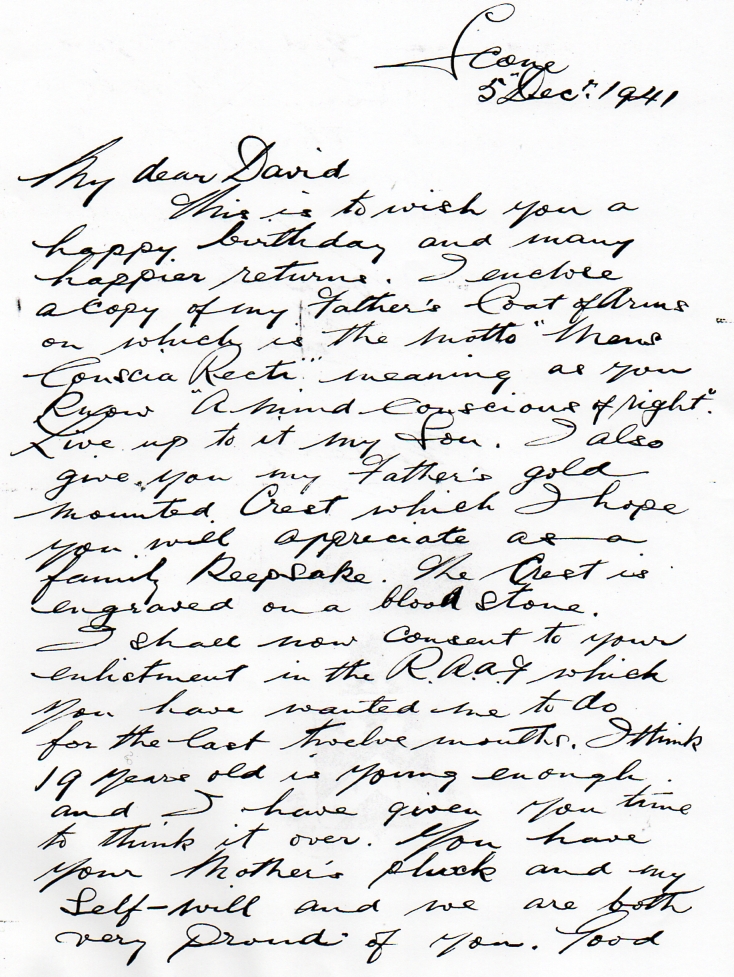
On 5th December 1941, David Burnell Westgarth, the father of Stephen and his brothers, was 19 years old. He was determined to go to war, but needed his father’s permission. Six years before his own death, George Mansfield Westgarth wrote his son this heartfelt permission letter, exhorting his son to conduct himself honourably as was the family motto ‘Mens Conscia Recti’. Thus George Charles’ home made coat of arms had become a powerful influence for George Mansfield. He also gave his beloved son his treasured bloodstone ring.
Scone
5th December 1941
My dear David,
This is to wish you a happy birthday and many happier returns. I enclose a copy of my father’s coat of arms, on which is the motto: “Mens Conscia Recti” meaning, as you know, “A mind conscious of right”. Live up to it my son. I also give you my father’s gold mounted crest, which I hope you will appreciate as a family keepsake. The crest is engraved on a blood stone.
I shall now consent to your enlistment in the RAAF which you have wanted me to do for the last twelve months. I think 19 years old is young enough and I have given you time to think it over. You have your mother’s pluck and my self-will and we are both very proud of you. Good luck and may God keep you safe my son. It will be the hardest thing that I have ever done when I sign the consent to your application.
Ever your loving
Dad
G.M.Westgarth
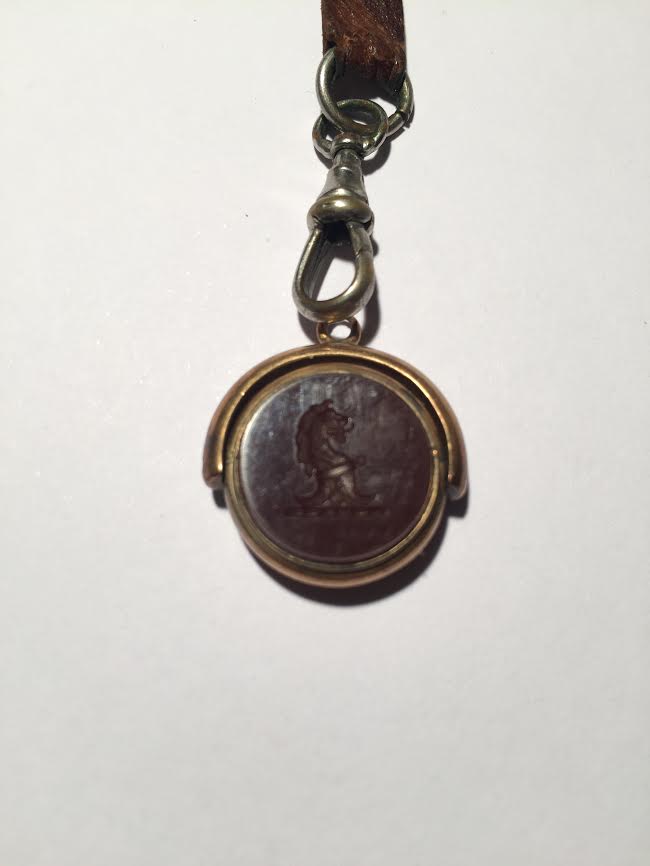
The Bloodstone Crest:
This letter revealed to me the existence of the coat of arms in another form. Just the lion on the top is called a ‘crest’ and George Charles had it engraved on a bloodstone set in gold.
Why did he go to this trouble?
George Charles lived in the days of pen and ink and blotting paper. I do remember them myself and I have a wonderful engraved metal holder for blotting paper which my grandfather Dudley had. Presumably it belonged to George Charles.
Along with pen and ink and blotting paper, people used sealing wax for documents and, in early times, for letters too. George Charles would have had need of a seal, which hung from a fob (or chain) at the waist. Men also had fob watches for many many years.
Here is the seal, with the lion crest on one side and initials on the other. It is now on a leather “fob” and has been passed down four generations to George Michael, who will presumably hand it on.
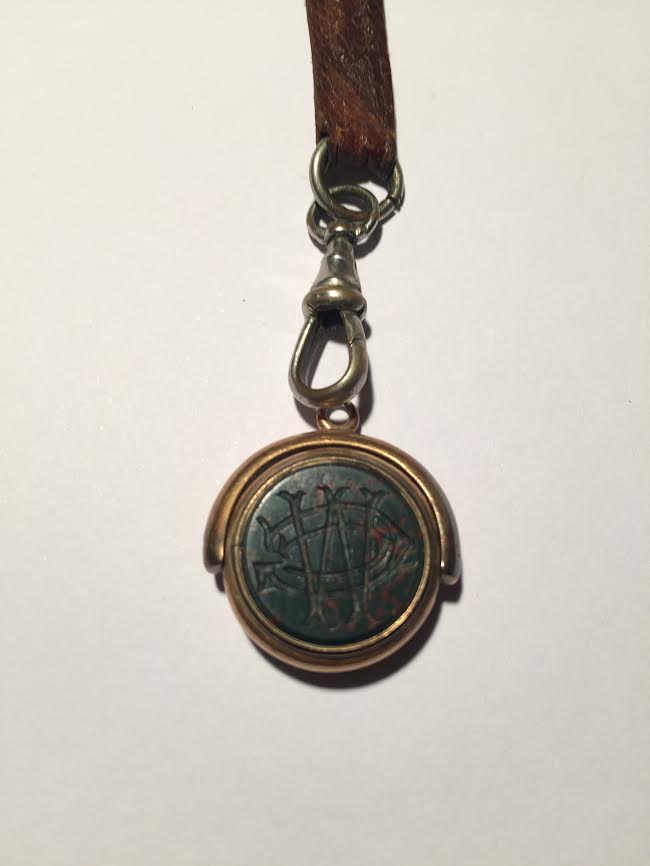
Children and grandchildren:
Stephen helped me identify the wartime and baby boomer children of George Mansfield’s six children. In contrast to modern fashions, all six children married and all six had at least two children!
- (George ) Robertson ( named after his father and his mother’s maiden name) married Berenice White and had Richard and Anthony (deceased).
- Barbara married Henry Cohen and had Dennis and Anita.
- Audrey married Bill Tewksbury and had Brenda and Gillian.
- Winston married Zoe Kemmis, his ‘cousin’ by marriage, (because Aunt Poppy had married Gerald Kemmis). They had Douglas (who died recently ), Roger and Penny.
- David married Judith Hall and had three sons, Stuart David, Kenneth Stephen and George Michael.
- Editha married Tom Croft and had Bettina, David and Kerry, two daughters and a son.
So George Mansfield and Katrine had six children and15 grandchildren. But families were getting smaller than the nineteenth century, when GMW was one of nine children (plus two babies which did not survive).
I wrote to Anita to ask her if she had any personal memories of George Mansfield, but it seems that he died before his grandchildren could properly remember him. Anita was only 2 in 1947 and has an impression of him standing at the door to what she thinks was the garage or a workshop at Garthgowan. Perhaps her brother, Denis, who was six, may have more memories.
Death of George Mansfield
George Mansfield died suddenly in Scone on 9th July 1947, aged 66. His obituary is long and his funeral service was overflowing with mourners and flowers:
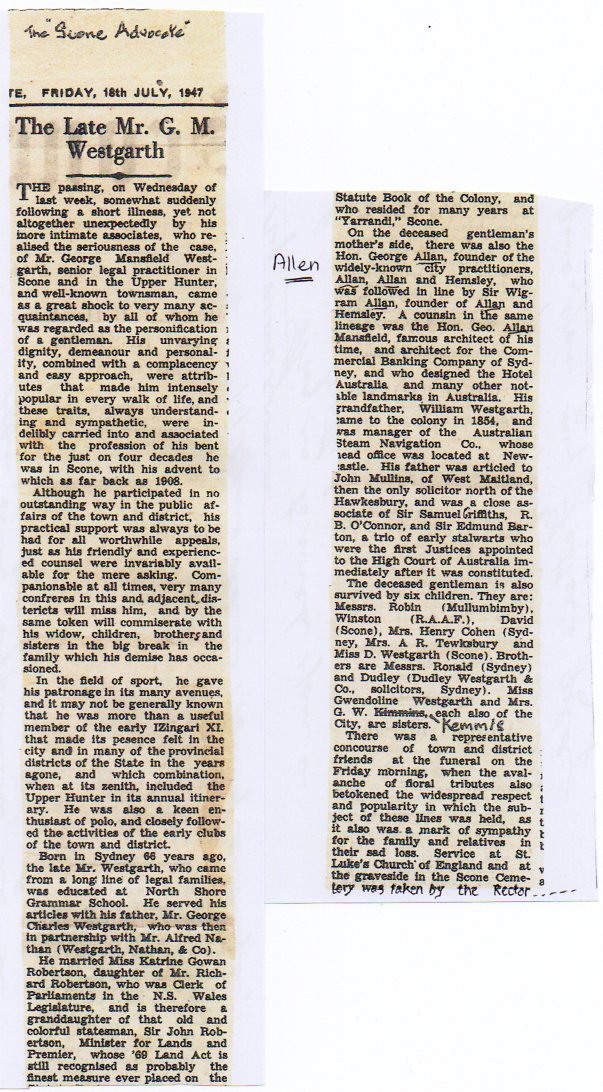
learn that Katrine’ s family came from Scone. We learn the whereabouts of his children in 1947 and realise that Editha was still only 19.
George Mansfield’s sister, Poppy, was now married to Gerald Kemmis. Ronald, Dudley and Gwendoline are also present at the funeral.
Overall, the high regard in which he was held in Scone is manifest here.
Corrections:
Allen (not Allan);
Kemmis (not Kimmins);
Westgarths came to Australia in 1853; the employment as Manager of ASN Co Branch was in Maitland from 1858.
Katrine lived to be eight days short of her 90th birthday and died on 22nd March 1922.
Since I wrote this, I have been contacted by Perdita Herbert, nee Kemmis, who is the granddaughter of Lorna, Katrine’s eldest sister. She has given me a lot more information about the family which I was so happy to receive. There were three Robertson girls, Lorna, Katrine and Mavis. Here is the photograph of the three sisters.
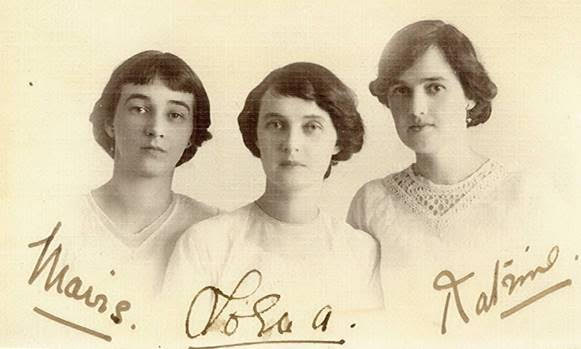
‘Lorna married Lionel de Camois Kemmis and had two sons, Boyd and Colin and a daughter called Struan. Katrine married George Mansfied Westgarth and had six children. Lastly Mavis was married to Sir Cyril Brooke Francis who I think was Chief Justice of Rhodesia and was brought out of retirement during the war to be Chief Justice of Bermuda. They had no children and finished their lives in London. Cyril had dementia and died in in 1971. Mavis died about 10 years later.‘
Peridita has sent me her grandmother, Lorna’s diaries for the years 1941 – 1958. They consist basically of family happenings, but they showed me how close the Westgarth family was intertwined with the Rodd/Robertson/Kemmis tribe. Lorna even had the same seamstress as my grandmother, Kathleen. Her name was Mrs Clinch and I knew her quite well.
Memories of Judy Westgarth, David’s wife:
Perdita’s input has triggered memories for Judy too. One of them tells me the situation of Katrine’s flat, which was Cremorne. Here is what she wrote:
‘I did know Aunty Lorna quite well as we visited her at Lindfield when our boys were young.
When David and I were first married we lived at Garthgowan and Katrine spent 6 months with Aunty Lorna , then came back to Garthgowan and we lived together for another 6 months and then David and I bought our own home in Oxford Road, Scone. In 1952 we moved to Leeton and Katrine sold Garthgowan and (eventually) bought a unit at Cremorne where she lived until she passed away. We were all set to give her a 90 th birthday, but it was not to happen.
I do remember Colin Kemmis coming to see us at Garthgowan on his way to visit Struan Crossing at Quirindi. Also we met up with some Kemmis family in Scone at “Yarrandi” the original Robertson home. That would have been about 20 years ago.
Zoe Westgarth was a wonderful friend to David and me, when we were in Sydney we always visited them at Rydalmere and later when they lived at Springwood, they called their house there “Scone”. We were always in touch with their children Penny, Doug and Roger.
We visited Aud, and Bill often at Inverell, such a fun couple. In fact David was very close to all his siblings, they were a close family.
Also we saw a lot of Mollie (Dudley’s daughter) when they lived at Leura, she was such a lovely person..
I only met Aunty Mavis once when they were out on a visit. It was at the Hydro! ‘ (Hydro Majestic at Medlow Bath)
Family Relationships:
The Rodd and Robertson families both arrived in Sydney around 1820. Having money behind them, they received land on Sydney Harbour and farming land too. The Kemmises arrived in Melbourne in 1828. There being very few free settlers at that time, they soon became rich and influential and intermarried. For example:
Brent Clements Rodd married Sarah Janet Robertson and had a son, Clements Tremayne Rodd and a daughter, Janet Editha Rodd, amongst other children.
Clements Tremayne Rodd married another Sarah Janet Robertson.
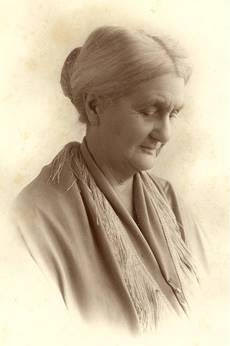
Janet Editha Rodd married Richard Windeyer Robertson. Her eldest child, Lorna Janet Robertson (b. 1880) married Lionel de Camois Kemmis. His youngest brother Gerald, married Violet (Poppy) Westgarth and Gerald’s daughter, Zoe Kemmis married George Mansfield Westgarth’s son, Winston.
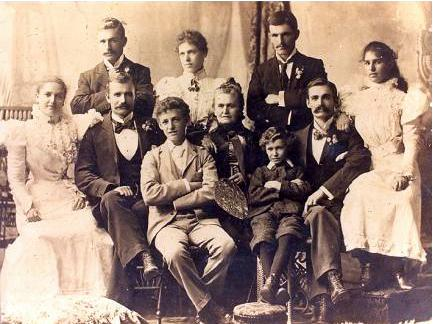
George Mansfield and Katrine called their eldest ‘George Robertson’ and their youngest ‘Editha’ after the Robertson family names.
Florence Sophia Rodd:
An earlier connection between the Robertsons, Rodds and Westgarths was the marriage of George Charles and Florence Sophia Rodd in 1872. From 1858 to 1870, George Charles was in Maitland, first as a schoolboy and then an articled clerk. Then he returned to his family in Five Dock, Sydney.
Scone in the Hunter Valley was the site of the Robertson landholdings and it was from there Sir John Robertson was launched into Parliament in 1856. Perhaps Sir John gave George Charles an introduction to John Savery Rodd family who lived in Potts Point. John Savery Rodd died in 1870 and he had 4 independently wealthy daughters! (Two at least were already married, Constance Josephine King and Anna Maria Letitia Kathleen Beckham. I can’t find any information about the other sister, Ellen Webster Rodd)
Note: John Savery Rodd’s wife was Kate Murray, a cousin of the Murrays of Yarralumla. The Murrays are mentioned in Nan’s diary (see next blog) – Trish
Katrine:
Here are Perdita’s memories of Katrine, her Auntie Katty.
Katrine Westgarth was the younger sister of my grandmother, Lorna Kemmis (Nan). We called her Auntie Katty and loved her. She was a much warmer person than our grandmother.
I particularly remember the period when she went to live with Nan from 1954. She was there for quite a long time until she got her own unit at Cremorne. I think Auntie Una may have left her money. Aunty Una and Uncle Paddy were often mentioned but I don’t think Aunty Una was a blood relation.
Neither Nan or Auntie Katty had ever learnt any mathematics. Their father considered that maths and exams were bad for girls. They had to concentrate on things like art and music and dancing. I particularly remember being embarrassed when Nan had bought half a pound of butter to share with Aunty Katty and they could not work out what half of 1/11d was (ie one shilling and eleven pence). The answer would have involved a halfpenny but we had them in those days.
There was to be a very big party for Auntie Katty’s 90th birthday, to which we were invited. Relatives were coming from far and near but she died eight days before the big event. Suddenly, I think. I didn’t know any of her children but Mum used to say that Barbie and Audie used to make her feel large and awkward. Auntie Katty was much larger than Mum. I think they came to Mum’s funeral in 1991 but they didn’t come to refreshments afterwards so I didn’t get to speak to them.
Nan always thought that Aunty Katty’s grandchildren were much more successful and interesting than hers. I think that was probably because Aunty Katty loved them dearly and extolled their virtues. Nan tended to be very critical of us, particularly of my sister and me. I was boisterous and tomboyish although I was conventionally ‘pretty’ with wavy hair. Jane had the misfortune to have olive skin and very straight much darker hair, a look which would be very attractive today. When Nan saw her in the summer she would throw up her hands and say, “She looks like an aborigine!” In her mind she could hardly say anything worse. In fact, my four siblings and I have been quite successful in the things we have undertaken in our lives, but we never seemed to do much of the sort of socialising Nan would have understood. Jane never married but, as a nurse, she was wonderful to Nan in her later years. She was also much loved by Auntie Mavis. While she was doing a certificate in Oncology at the Royal Marsden Hospital in London she saw a lot of Auntie Mavis who was nearly blind.
Notes about Zoe Kemmis
I did meet Zoe, in later years. Of course we were doubly connected because she was Dad’s cousin (Grandad’s niece) and was born a Kemmis. I think she rang me out of the blue to tell me that one of Winston’s sisters had died. She said she wanted to tell someone but couldn’t think who to tell. She was widowed and living in a Retirement Village in Springwood and I went to see her. I loved her instantly and felt as if I had known her all my life. Subsequently she was admitted to the nursing home where I visited her quite a few times. She was sitting up in bed gamely trying to use the internet and send emails. I still have a dozen of her emails on my computer. Penny was the only one of her children who I met to talk to although I suppose I met the others at her funeral.
I will put Perdita’s grandmother’s diary in a separate blog. If I get more information from Perdita I will add to this. Nice to get some first hand memories!
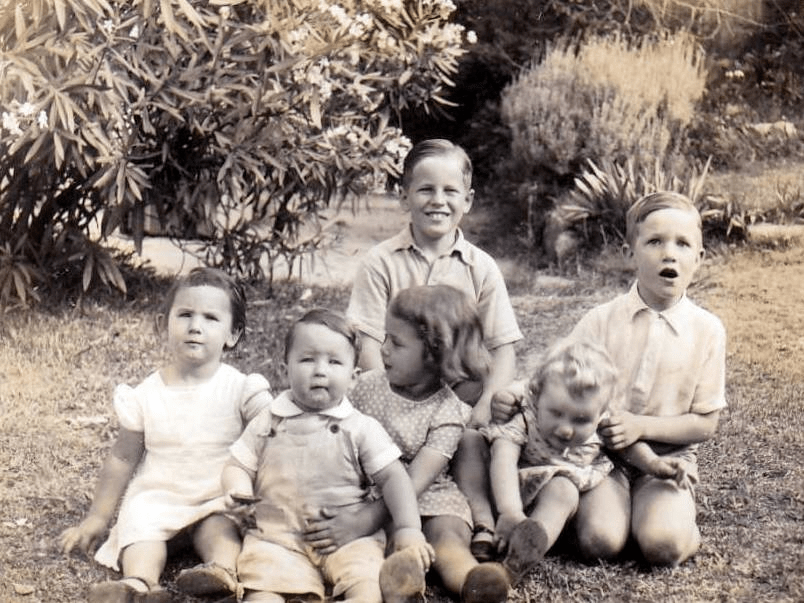
Shaen (now Blackman) lives in Mudgee. .
 westgarth and glassons